$25-30 | 1st & 3rd Sundays - occasionally changed | 10:30am–12pm
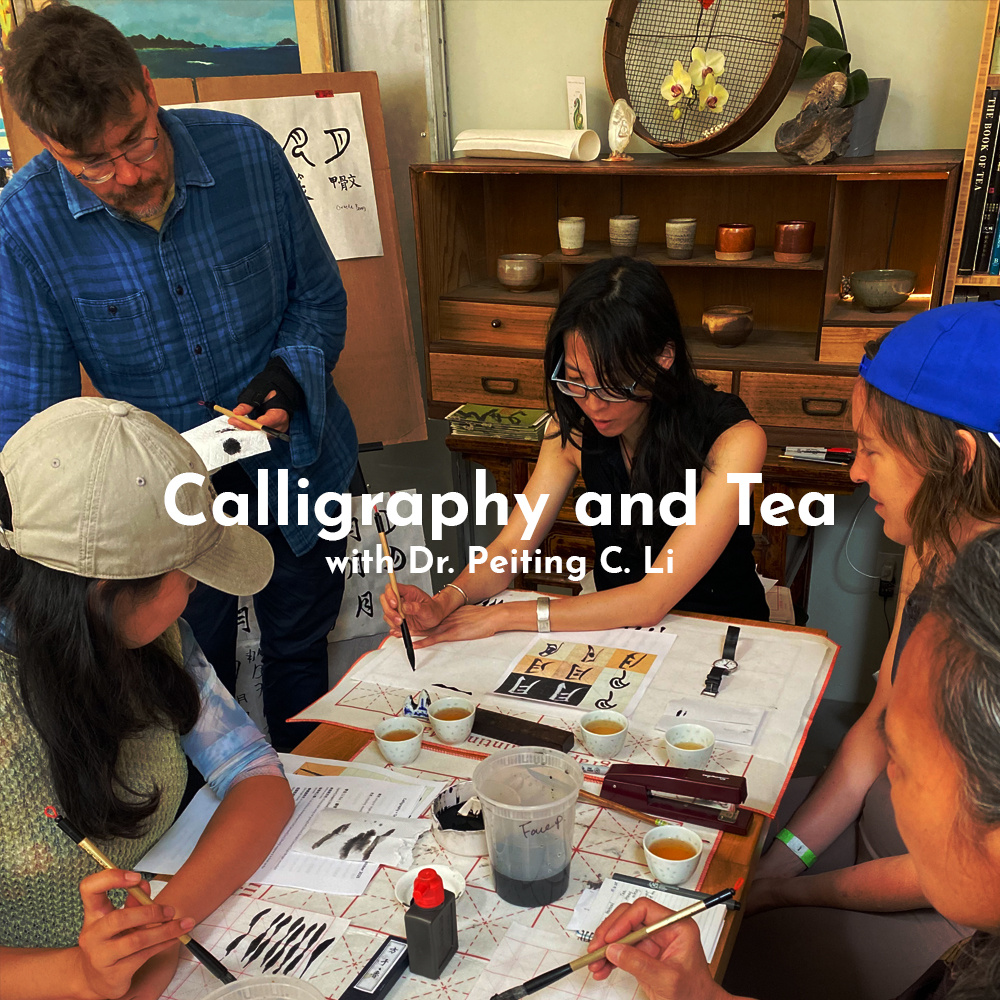
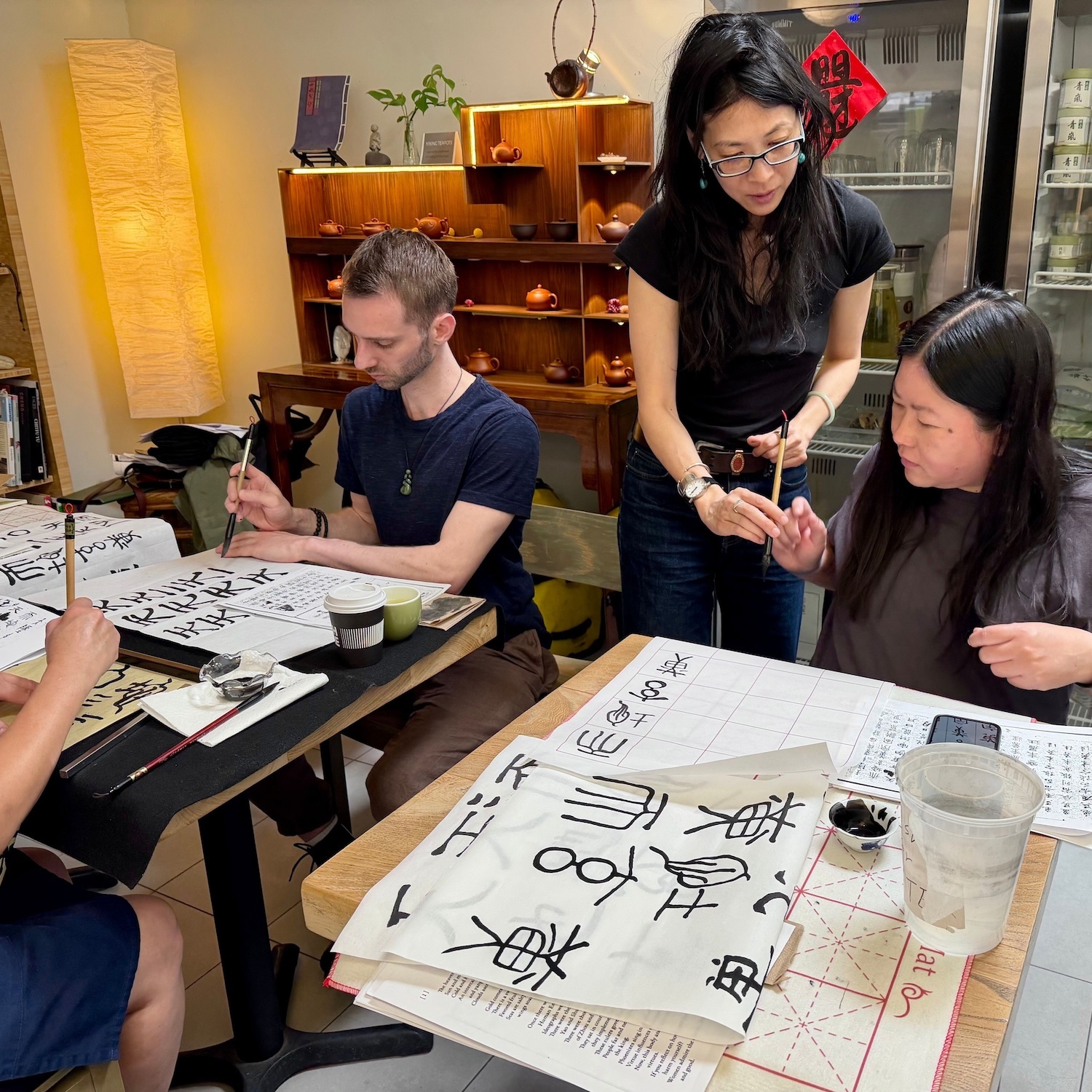
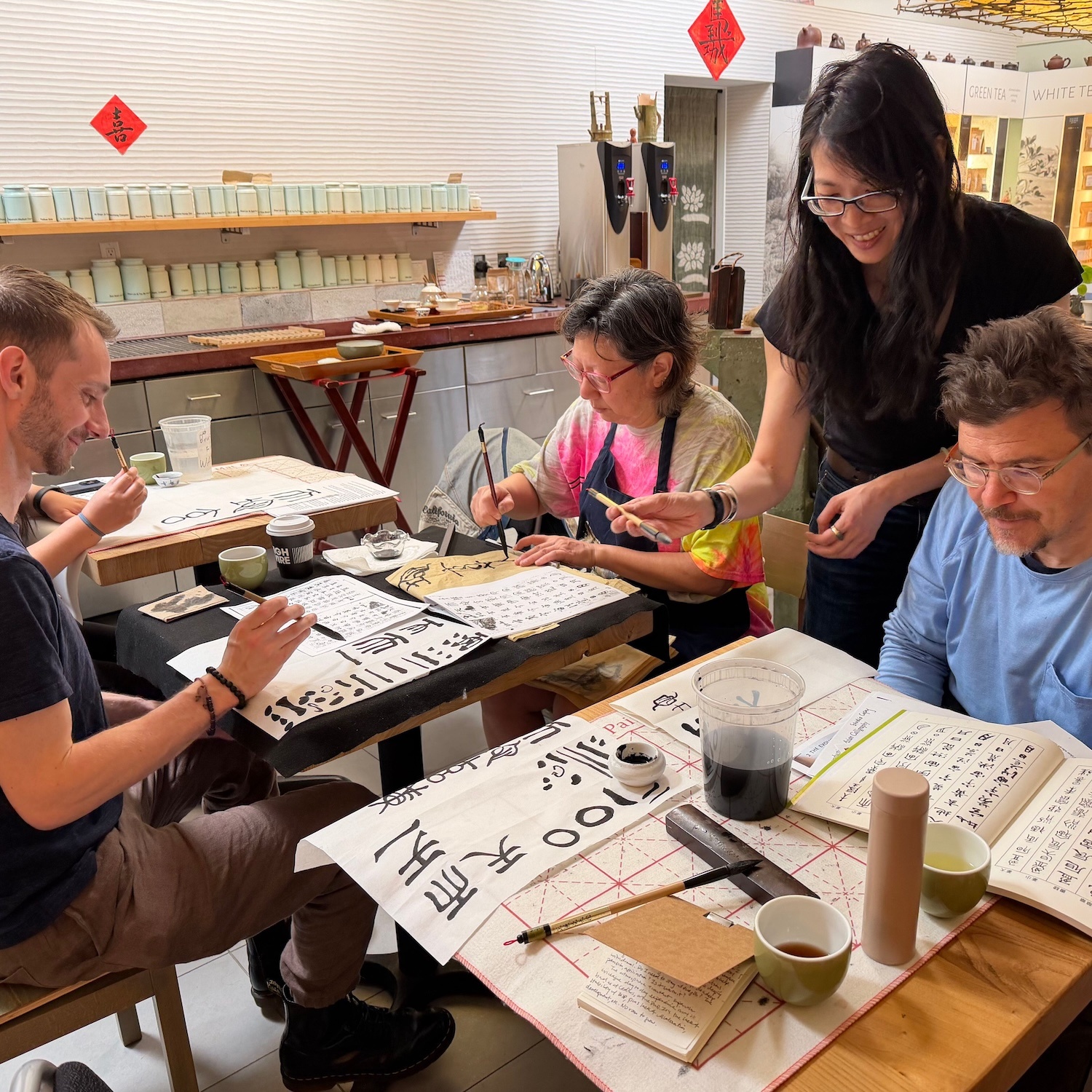
You are invited to the cultivation of the self and community through practice of "calligraphy and tea" at Teance. This bi-weekly group will be a shared space for calligraphy practitioners and the new, calligraphy curious alike.
Joined by an openness to the unfolding of things, Chinese calligraphy helps create attention and presence through the ritual of embodied practice.
**Students welcome to bring food and eat lunch in courtyard after class together with teacher!!
- Please register directly with the instructor using the links below:
- Class Fee:
- $25 — Bring your own paper, ink, and brush.
- $30 — Use the instructor's materials ($25 class fee + $5 materials fee).
- Tickets are non-refundable, However, if you cancel a day before the class, the fee can go toward the future class.
- Class Size & Registration:
- This is an intimate class limited to 10 students. Registration closes once 10 students have registered.
- Your spot is not reserved until payment has been received.
- Cancellation Policy:
-
Class fees are non-refundable. If you need to cancel, please notify the instructor at least 24 hours before the class. Your class fee can then be applied as a credit toward a future class. Email: [email protected]
Cancellations made less than 24 hours before class are not eligible for credit.
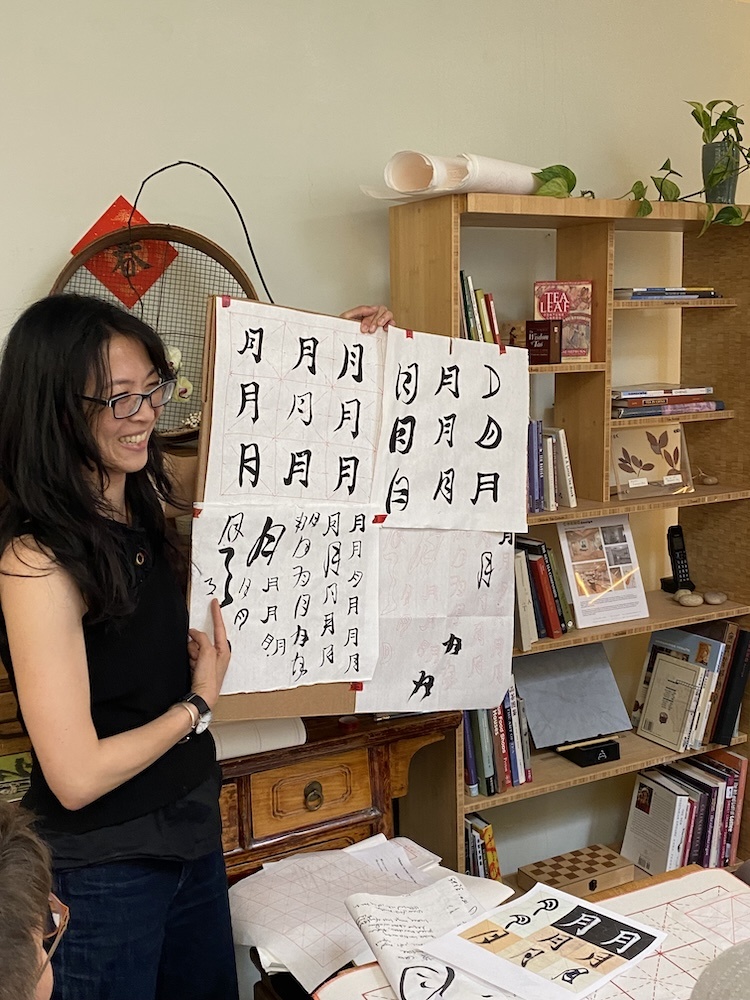
Group will be led by Dr. Peiting C. Li, PhD - former instructor of Chinese Calligraphy at the UC Berkeley Art Studio.
Bio
Peiting C. Li is a practitioner of Chinese calligraphy whose journey has spanned nearly two decades, including studying with teachers in Shanghai, Taipei, and the Bay Area. She taught calligraphy at the
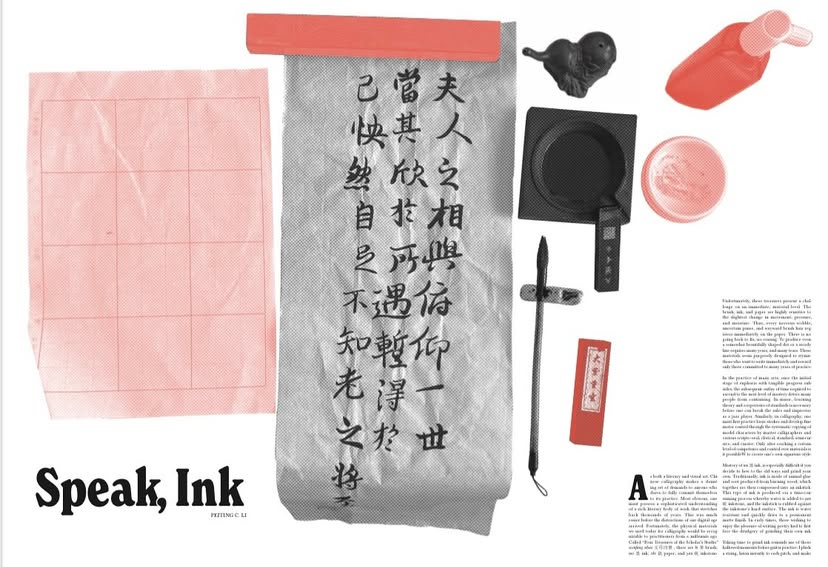
UC Berkeley Art Studio. She received a PhD in history of modern China, and is working on a book about healing and art from a cross-cultural perspective. Recently, her essay on calligraphy practice,
“Speak, Ink” was published in the Seattle design magazine,
Arcade.
July class content: Mid-summer 仲夏 zhong xia: speak not of ice
Come summer we enjoy light going long in the day, and a fecundity of fruits. Yet summer also reminds us that ultimately we are captives of the season. To avoid heat stroke, we duck under parasol umbrellas (or into air-conditioned rooms), nibble on cool melons, and clothe ourselves lightly, in linen or less.
The philosopher Zhuangzi (c 369-298 BC) uses the summer inspect as a metaphor for the limits of time and place, writing:
夏蟲不可以語於冰者,篤於時也
xia chong bu yi yu yu bing zhe,du yu shi ye
A summer insect [you] cannot speak with it about ice, it is bound by its season
This is part of a larger argument about the limits of language in capturing first-hand experience. Never trust a summer insect who speaks of ice 夏蟲語冰 xia chong yu bing.
In July we will cover the words for the four seasons: spring, summer, autumn, winter 春夏秋冬 chun xia qiu dong
And some related poetic terms and phrases.
Consider:
spring sow, summer grow, autumn harvest, winter store: 春生夏長秋收冬藏 chun sheng xia zhang qiu shou dong cang
cold (season) comes warm (season) goes; autumn harvest, winter store 寒來暑往 秋收冬藏 han lai shu wang quiz shou dong can’t
summer poplin winter fur 夏葛冬裘 xia be dong qiu (right things at the right time; take appropriate action according to the circumstances)
Class handouts/reference materials will be shared with registered participants.
Low-caffeine and herbal teas will be provided upon request.
////////////////////////////////////////////////////
June
we’ll be learning about shape and structure of characters, combined with two very well-known Chinese proverbs: 百聞不如一見 (bai wen bu ru yi jian) and 天無絕人之路 (tian wu jue ren zhi lu).
April Representation & Abstraction
In April, we investigate the journey from representation to abstraction in Chinese calligraphy. Leaving home to arrive home…
For each historical script, we look at technique (e.g. brush rotation & pressure) and qualities of form (e.g. line variation & connecting strokes).
4/5: seal 篆 zhuan, clerical 隸 li, standard 楷 kai scripts 書 shu
4/19: standard 楷 kai, semi-cursive 行 xing, cursive 草 capo scripts 書 shu
Class handouts/reference materials will be shared with registered participants.
Low-caffeine and herbal teas will be provided upon request.
March
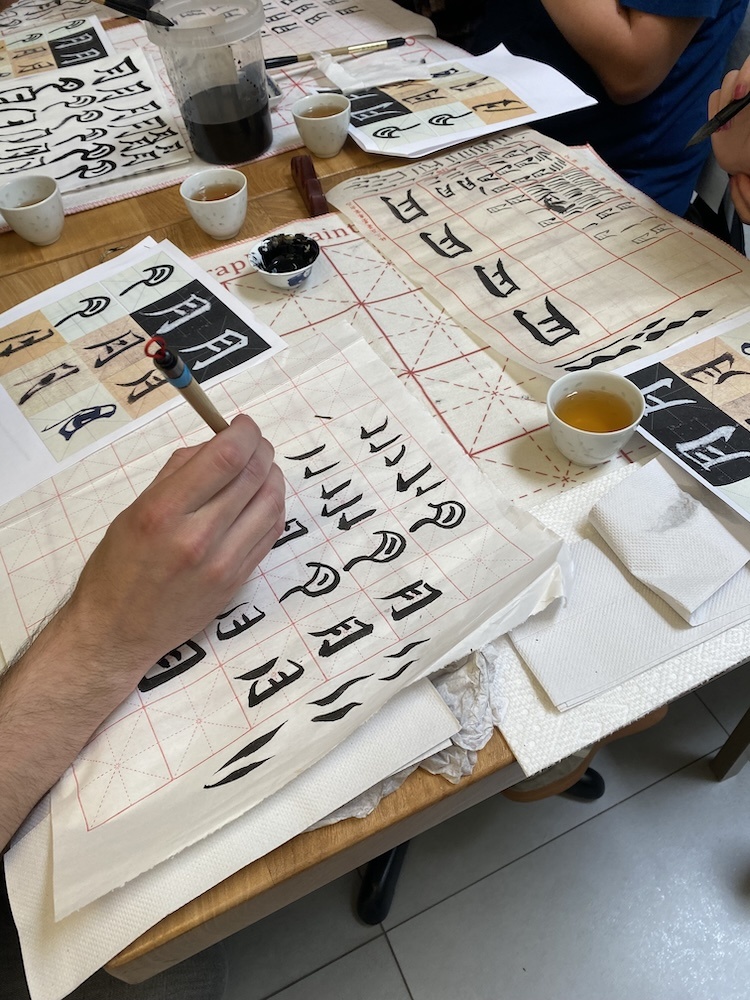
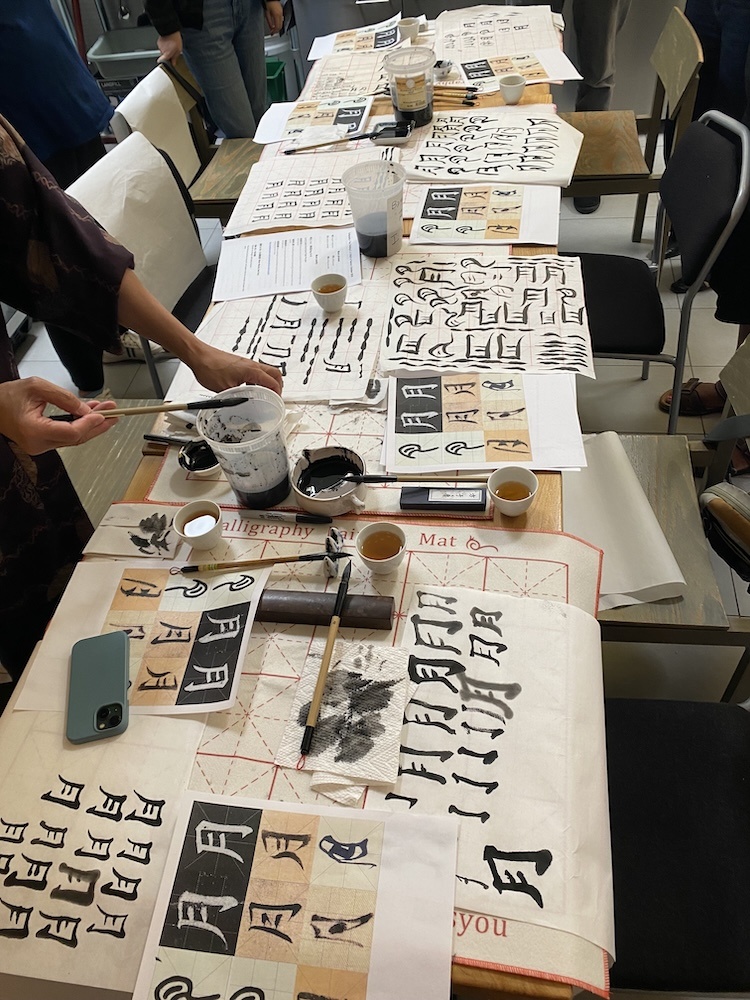
This month we focus on two fundamental, constitutive elements of Chinese calligraphy: the strokes 點 (点)dian dot and 橫 heng horizontal line. In essence every stroke and character contain qualities of both dot and line; similar perhaps to the discovery that light is both wave and particle. We cover basic types of these forms and their arrangements in different characters. Focus will be on mastering basic techniques and small adjustments that yield outsize effects to create beautiful forms with good energy.
February 15
Horse 馬 Ma
We will do a deeper dive into various versions of 馬 ma horse and some resonant sayings, including a personal favorite of the instructor:
路遙知馬力 日久見人心 lu yao zhi ma li ri jiu jian ren xin just as distance determines the stamina of a horse, so does time reveal a person’s true heart.
February 01
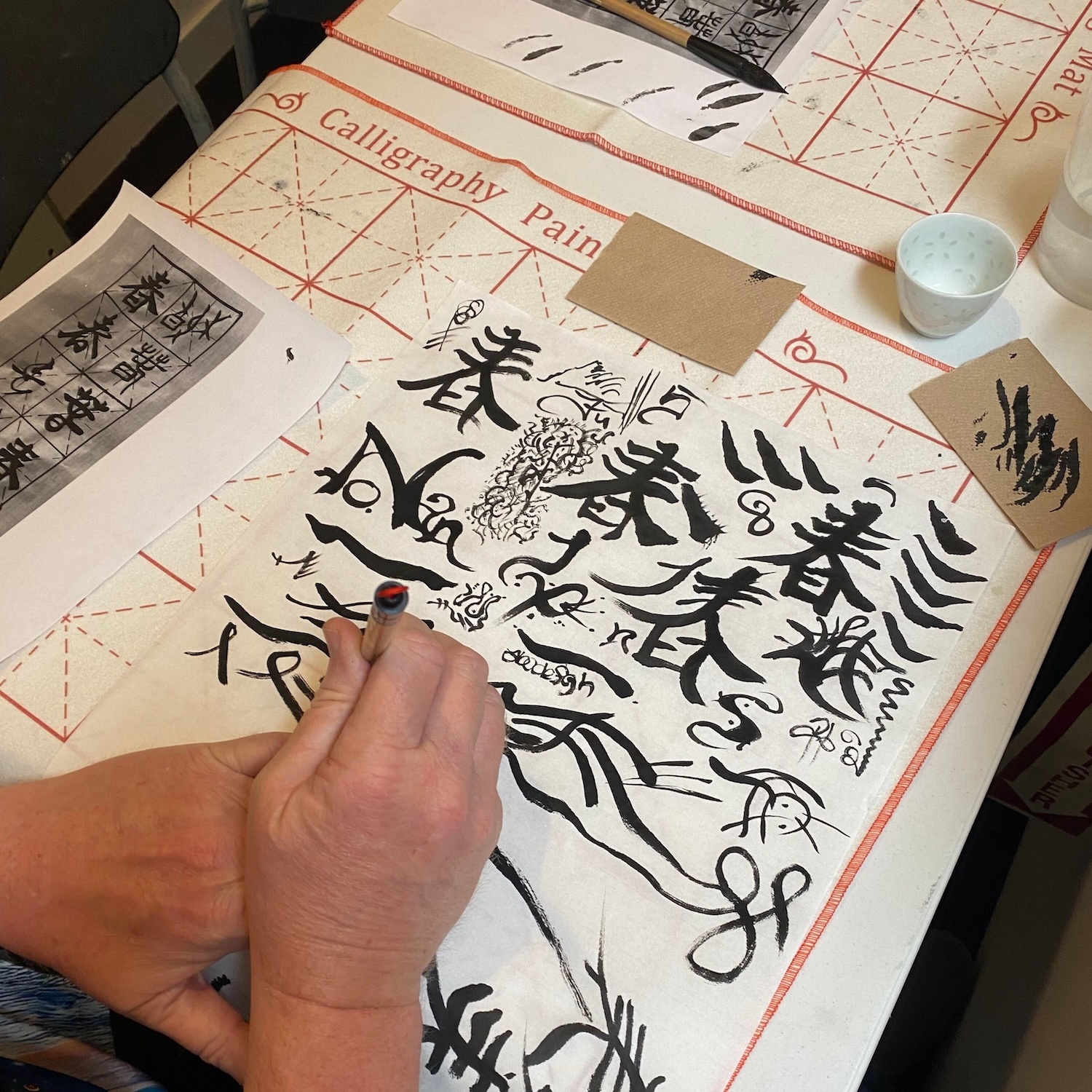
Spring 春 | Fortune 福
At the start of the Lunar New Year, we summon good luck and conjure the vitality and dynamic energy of the horse.
The Feb 1 class will cover the auspicious characters 福 fu good fortune and 春 chun spring (for lunar new year, also called spring festival 春節 chunjie).
December 7 & 21
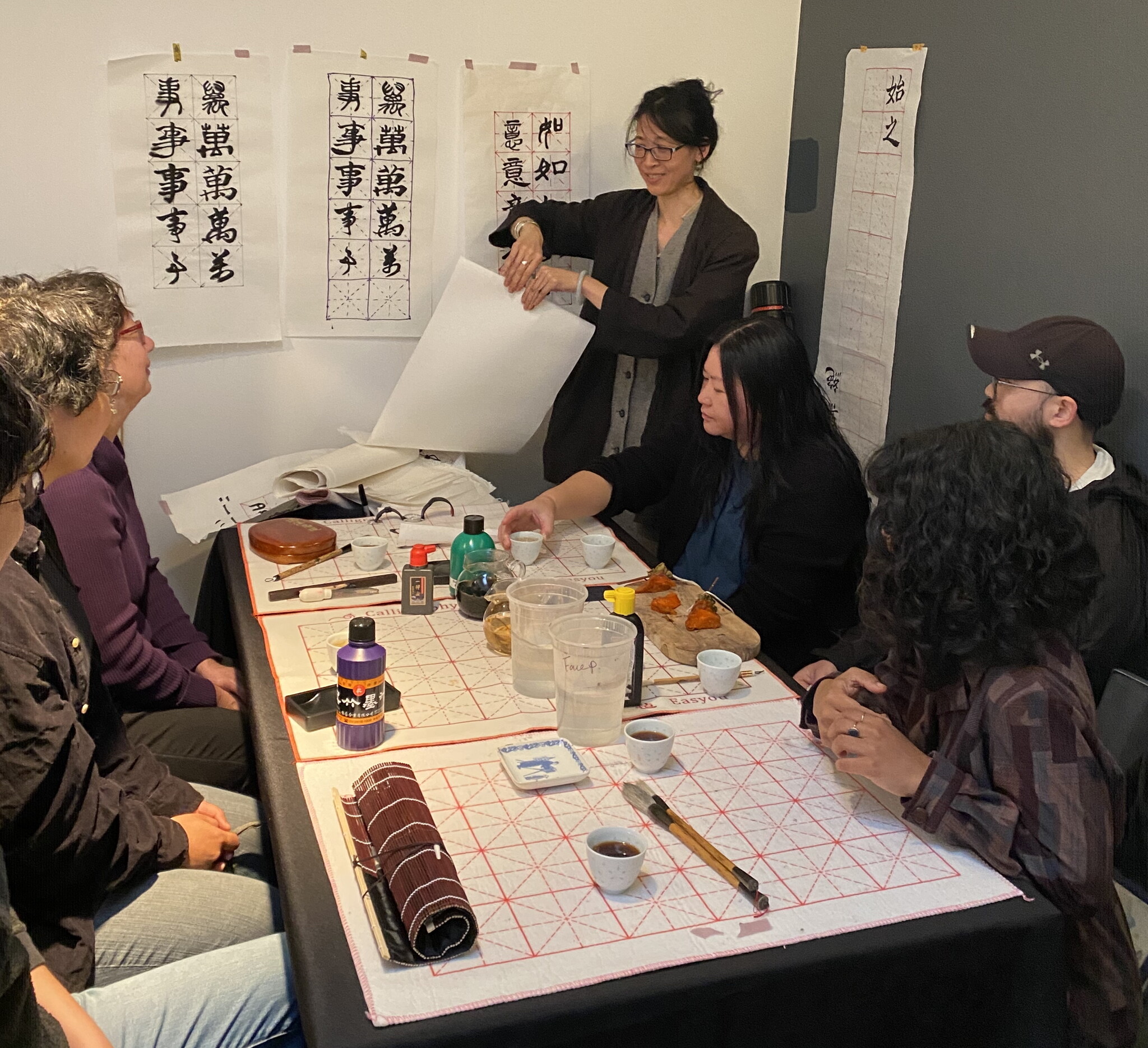
As Desired: 如意 ruyi
To close out the year 2025, we’ll conjure the fulfillment of all, or at least some, of our wishes as embodied in the notion of ruyi 如意 “as desired” or “as you wish.”
Such a sentiment is often invoked by the popular phrase 萬事如意 wan shi ru yi - “may ten thousand things go according to your wishes” (may everything turn out as you wish; may all your wishes come true).
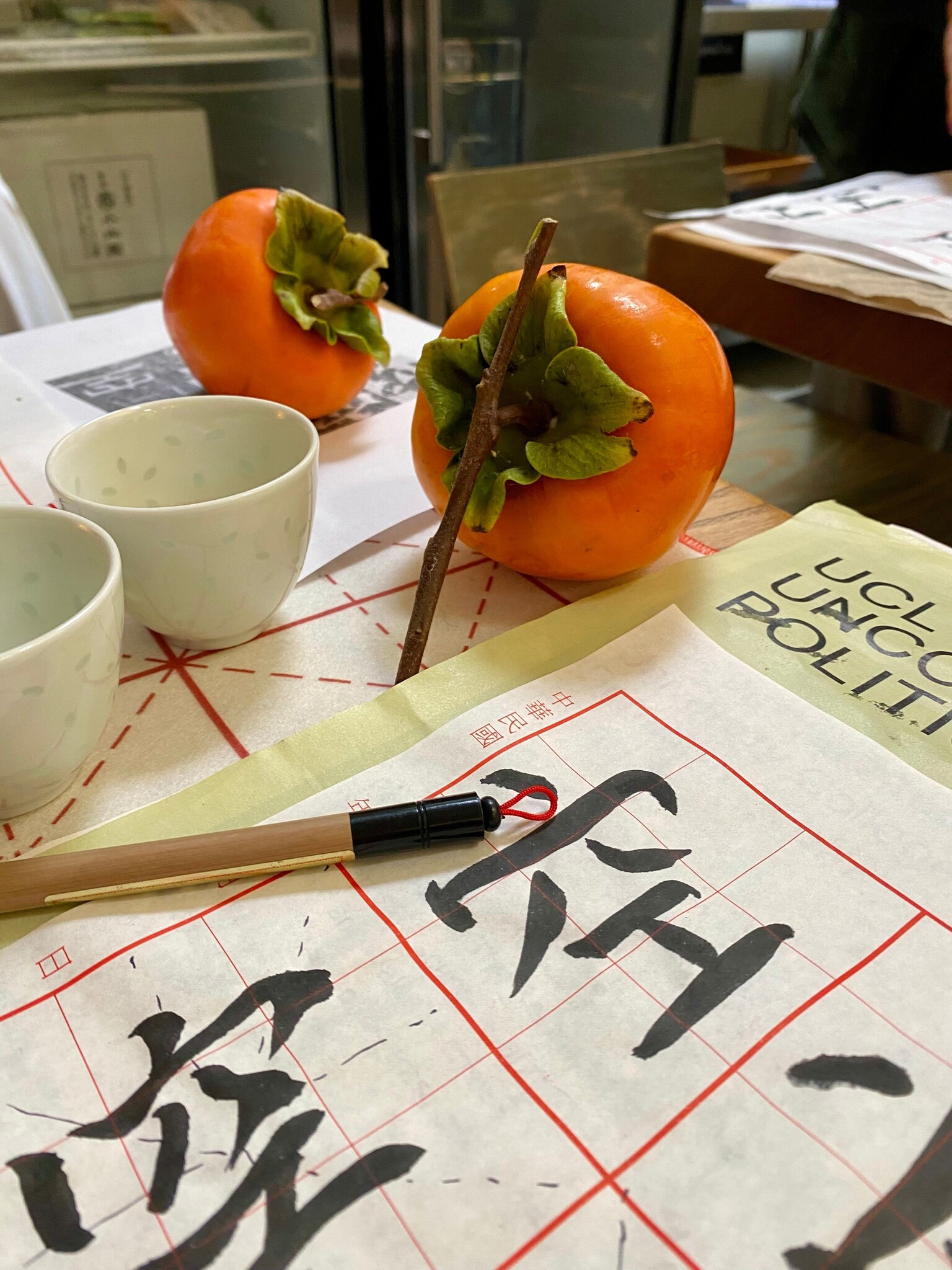
The persimmon (柿 shi), that red-orange, strikingly beautiful, antioxidant-rich winter fruit, is also a surprising poetic powerhouse because it shares the same pronunciation with 事 shi “matters, things” in that aforementioned aspirational phrase. Its depiction in Chinese art is, thus, a visual pun or symbol for good luck and prosperity…and the fulfillment of all one’s wishes.
Instructor will bring dried persimmons, known as 柿餅 shibing or, more commonly, as 干し柿 hoshigaki, in Japanese. Each year she picks several hundred from a single tree at her childhood home and hand peels and hangs them to dry in her Berkeley kitchen.